- Home
- 講演会・ワークショップ
- 1月13日 Dr.Lappin WISE/LP特別講義を開催しました
1月13日 Dr.Lappin WISE/LP特別講義を開催しました
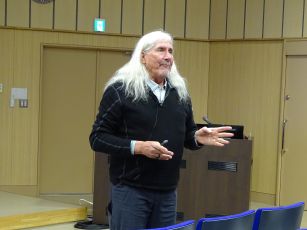
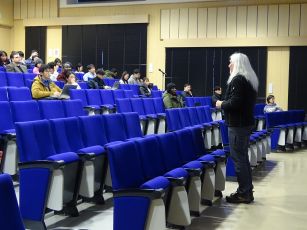
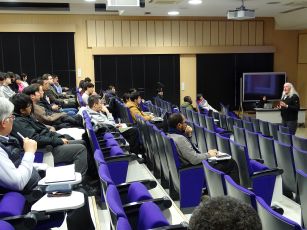
We had the great honor of inviting Dr. Michael Lappin from Colorado State University to give a seminar entitled “Zoonoses in Companion Animals.” Dr. Lappin is currently the Kenneth W. Smith Professor in Small Animal Clinical Veterinary Medicine at Colorado State University and the Director of the Center for Companion Animal Studies. In addition, he serves as the Chair of the World Small Animal Veterinary Association (WSAVA) One Health Committee, where he plays a leading role in promoting the concept of One Health and strengthening collaboration between human and veterinary medicine on a global scale. As an internationally recognized authority in infectious diseases and zoonoses in companion animals, Dr. Lappin’s research and clinical contributions have had a significant impact on both veterinary practice and public health. Having the opportunity to host such a distinguished expert in the WISE/LP seminar series was truly a privilege and a valuable learning experience for all participants.
The timing of this seminar was particularly meaningful because Dr. Lappin introduced the most recent updates to the WSAVA guidelines, which were just about to be officially released at the time of the lecture. Being able to learn this cutting-edge information directly from the guideline leader himself, before it became publicly available, was a rare and exceptional opportunity. It highlighted the importance of staying updated with global standards and evidence-based recommendations in veterinary medicine.
At the beginning of the lecture, Dr. Lappin emphasized that although there are many zoonotic diseases that can be transmitted from companion animals to humans, pet ownership should always be considered based on a balance between risks and benefits. He clearly stated that, when appropriate preventive measures are taken, the benefits of living with companion animals far outweigh the potential risks. This introduction was very impressive and reassuring, as it reminded us that the goal of zoonosis education is not to create fear, but to promote safe, informed, and healthy coexistence between humans and animals.
One of the most interesting topics was leptospirosis, which has also become a topic of concern in Japan. While doxycycline is widely known as an effective treatment, I learned that after four doses of doxycycline, infectious pathogens are no longer detectable. This information is extremely important for determining the necessary duration of isolation and infection control measures, particularly for veterinary professionals who are at risk of occupational exposure. It provides practical guidance that can be directly applied in clinical and hospital settings.
The lecture also addressed feline toxoplasmosis. I was surprised to learn that the probability of direct transmission from cats is actually low, and that environmental exposure plays a significant role. The fact that even vegans can become infected strongly suggests that soil and environmental contamination are important sources of infection. Since I enjoy gardening in the summer, this information made me personally more aware of the need for protective measures when handling soil.
In addition to the academic content, serving as the chair of this seminar was a highly rewarding experience. Introducing such a distinguished speaker, managing the session, and facilitating discussion strengthened my confidence and sense of responsibility as a host student. Overall, this seminar was both academically enriching and personally meaningful.
Report by Izumi KIDA (Organizer / Chiar)